Why small-bathroom planning matters in New Jersey
Small bathrooms require focused decisions: layout efficiency, durable materials for humid climates, and fixtures sized for limited square footage. Thoughtful planning reduces change orders, keeps costs predictable, and makes the room function better long-term.
Common space-saving layouts
Three layout strategies solve most small-bathroom problems: a wet-wall layout that keeps plumbing on one wall, corner or neo-angle showers to free floor area, and linear vanities or floating sinks to increase perceived space. Choosing one approach early in planning saves demolition and rework.
Materials and fixtures that work well
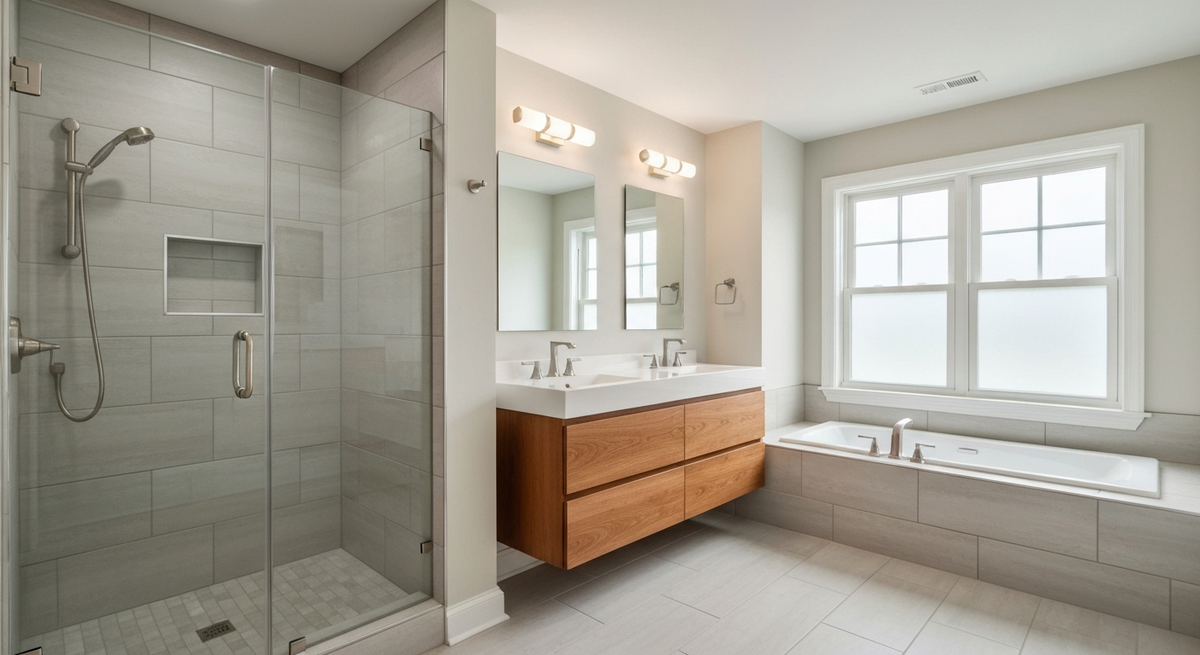
- Walk-in showers with glass panels instead of full enclosures to keep sight lines open
- Wall-mounted or shallow-depth vanities to maximize floor space and cleaning access
- Large-format or rectified tile laid vertically to reduce grout lines and visually heighten the room
- Moisture-resistant drywall or cement backer board in wet zones for durability
- Compact, low-profile toilets and tankless or concealed-tank options where code allows
Typical cost drivers for small bathroom remodels
Costs depend on scope (cosmetic update vs. full gut), moving plumbing or electrical, fixture quality, tile and finish selection, and local permit costs. Labor in NJ varies by town; jobs that change plumbing location or require structural work increase both cost and timeline. Material choices often create the biggest budget swing.
How to budget: realistic categories
- Design/plans and permits — layout drawings, code compliance, permit fees
- Demolition and disposal — removing old fixtures, tiles, and hauling debris
- Plumbing and electrical — rough-in work, water lines, drains, new lighting or ventilation
- Fixtures and finishes — vanity, toilet, shower, tile, hardware, paint
- Labor and contingency — contractor labor plus a contingency (for unforeseen issues)
Typical remodel process and homeowner decisions
- Initial consult and site visit — measure, discuss goals, identify constraints
- Design and estimate — layout options, fixture selection, written bid
- Permits and scheduling — pull required permits and set start date
- Demolition and rough-in — remove old materials, complete plumbing/electrical changes
- Finish work — tile, cabinetry, fixtures, paint, trim
- Final inspection and walkthrough — verify work, address punch-list
Timeline expectations and common causes of delay
A straightforward cosmetic refresh can take 1–2 weeks; a full gut and reconfigure typically runs 4–8 weeks from start to finish. Delays most often come from permit wait times, backordered fixtures, unexpected water or mold damage found during demolition, and scheduling conflicts for specialty trades like tile setters or plumbers.
Ways to reduce disruption while living through work
- Set up a temporary bathroom elsewhere in the home or coordinate short stays with family/friends during critical phases
- Agree on daily or weekly work hours and cleanup expectations with your contractor
- Pick long-lead items early and approve selections before work starts to avoid hold-ups
- Keep a dedicated storage space for personal items removed from the work area
What to look for in a contractor
- Clear, written estimates that separate materials, labor, permits, and contingencies
- A defined scope of work and schedule with milestones and a communication plan
- A local track record of completed bathroom projects and references you can check
Design options by common small-bathroom types
- Half bath / powder room — focus on a compact sink, efficient toilet, and bold finishes since size limits storage
- Full bath with tub — consider alcove tubs or combo tub-shower units; use built-in storage or recessed niches
- Shower-only bath — maximize floor space with curbless entry and glass panels; add shelving in shower walls
Next steps: evaluation and estimate
Start with a site visit so a contractor can measure, note plumbing locations, and identify potential complications. A walkthrough produces a reliable estimate and schedule. For specific design ideas and a written estimate, arrange an on-site consultation.