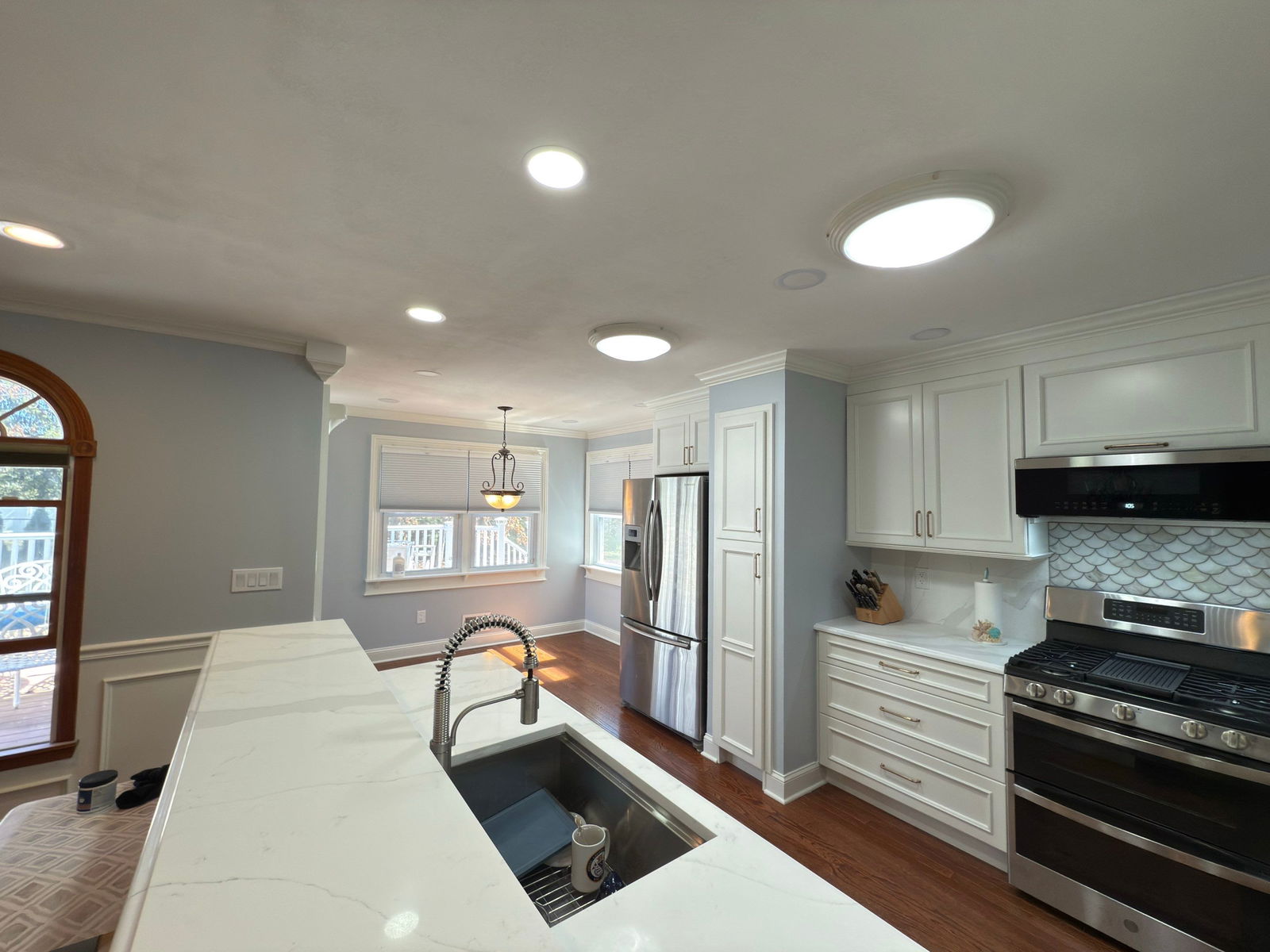
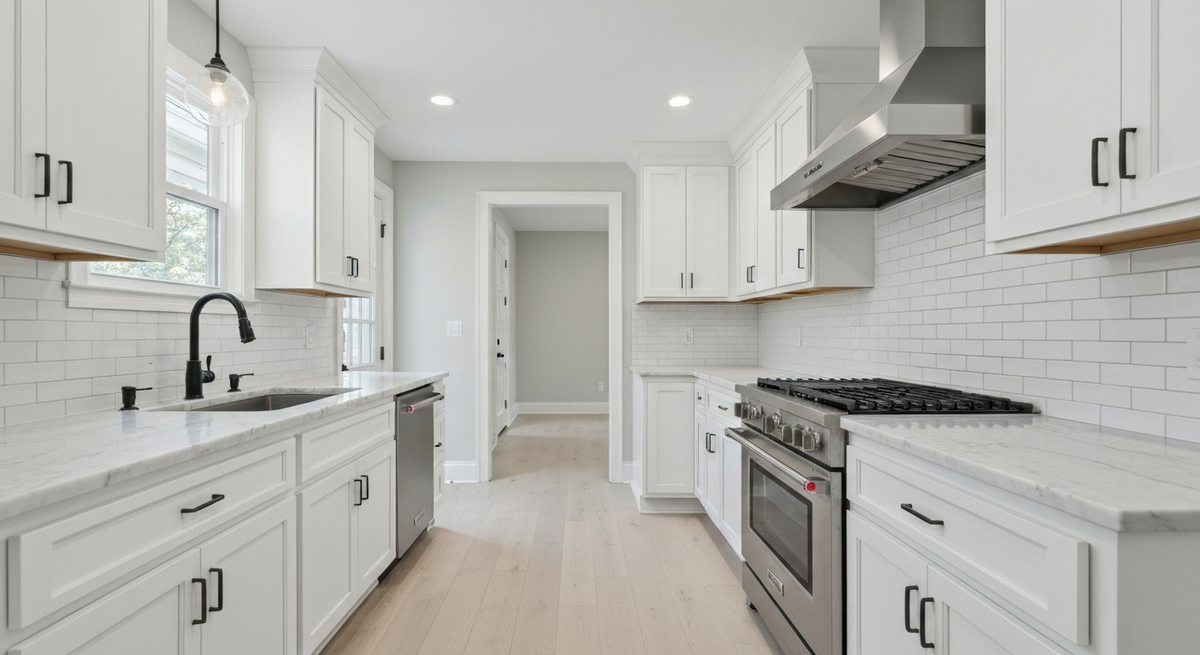
What causes painted kitchen cabinets to peel
Peeling usually comes down to surface contamination, poor adhesion, or movement. Common culprits: grease and cooking oils left on cabinet faces, old finishes that weren’t fully sanded or deglossed, dust and fingerprints on prepped surfaces, incompatible paint systems (latex over oil without proper primer), and moisture or seasonal humidity changes that make wood or MDF expand and contract.
How to diagnose the problem (quick homeowner checks)
Start with a scratch test: press a fingernail into an edge where paint is lifting. If paint flakes in thin, dusty layers, adhesion failed at the coating layer. If the paint lifts in larger sheets down to bare wood or MDF, adhesion to the substrate failed. Smell the area — a greasy odor or visible oily residue points to contamination.
Fix options and when each makes sense
Touch-up: acceptable for small, isolated chips when substrate and adjacent finish are sound. Sand back to firm edges, clean with a degreaser, prime with a bonding primer, then topcoat. Full refinish of doors and drawers: required when multiple panels fail, when finish thickness is thin, or when color change is drastic.
Key prep steps that prevent peeling
- Degrease thoroughly with a trisodium phosphate (TSP) substitute or a commercial kitchen degreaser; wipe to no-smear finish.
- Sand or scuff all surfaces: 120–150 grit for existing painted surfaces, 180–220 grit for factory finishes or laminate before priming.
- Remove dust: vacuum and tack-cloth before priming; even small dust particles cause fisheyes and lifts.
- Use a high-adhesion bonding primer compatible with both substrate and topcoat chemistry.
- Allow proper dry and cure times between primer and topcoat; don’t shortcut cure windows.
Why spraying doors usually beats brushing
Spray application gives thin, even coats and better flow-out than brush or roller. That builds uniform film thickness without brush marks or high points that can crack at edges. Spraying also lets you control wet-film thickness and dry time more consistently, which improves crosslinking and adhesion for lacquer, conversion varnish, or waterborne acrylic-polyurethane systems commonly used on.
Typical contractor process for a cabinet repaint
- Walkthrough and condition assessment: document chips, delamination, and substrate type.
- Remove doors and drawers, tag locations, and remove hardware for off-site or in-place work.
- Degrease every piece and area; let dry fully (24 hours in dry conditions).
- Sand or strip as needed; repair veneer/MDF edges and fill gouges.
- Apply bonding primer compatible with topcoat (spray recommended for doors).
- Spray two thin topcoats with appropriate flash and cure times; allow specified oven or ambient cure.
- Reinstall hardware and doors after manufacturer-recommended cure time; final touch-ups.
Cost and timeline expectations for New Jersey homeowners
Expect wide variance: a small kitchen repaint (doors only, off-site spraying) can take 1–2 weeks from pickup to rehang, while a larger job or full in-place repaint may run 2–4 weeks depending on cure schedules and contractor backlog.
Red flags in contractor scopes
- No mention of degreasing or testing for grease contamination.
- Scope only lists 'sand and paint' without primer brand or adhesion method.
- Promises same-day rehang or same-day full cure — quality primers and topcoats need proper flash/cure.
- No description of hardware removal, door tagging, or storage during work.
- No warranty period or written maintenance recommendations for painted finishes.
DIY vs hiring a pro — a practical guide
DIY can be fine for small touch-ups or a single door if you have decent prep discipline and space to spray or apply multiple thin brush coats. Stop and hire a pro when: many panels are failing, the finish is oil-based and you plan to change systems, doors need repairs or replacement, or you want a spray-quality finish.
Related reading and services
- Kitchen repaint or full remodel options Kitchen Remodeling
- Planning paint budgets across your house Whole house interior paint cost explained for NJ homeowners
- If you’re in Westfield and want an on-site inspection Westfield, NJ appointment page
What we inspect during a cabinet walkthrough
- Condition of door edges and underside for delamination
- Presence of grease or cooking residues in problem zones
- Substrate type (solid wood, veneered plywood, particleboard, MDF, or laminate)
- Hardware alignment, hinge wear, and whether doors need reinforcement
- Ventilation and humidity risks near cooktop or dishwasher
Next step: schedule a walkthrough
If peeling affects more than a couple of panels or you want a durable spray finish, schedule a no-obligation walkthrough so we can inspect substrates and give a written scope. We’ll check for grease contamination, note repairs, and outline an off-site spray schedule or in-place plan with realistic cure times.