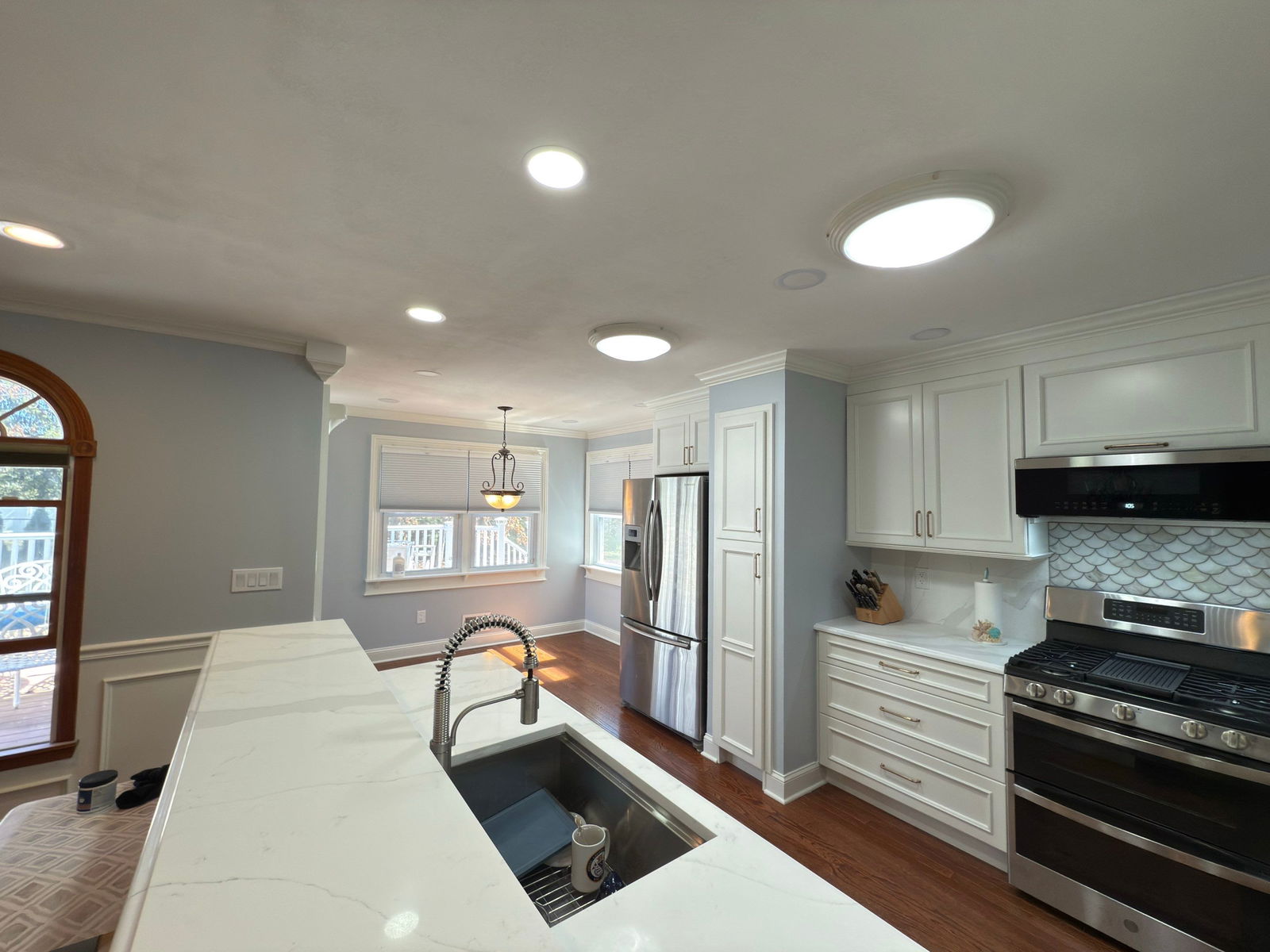
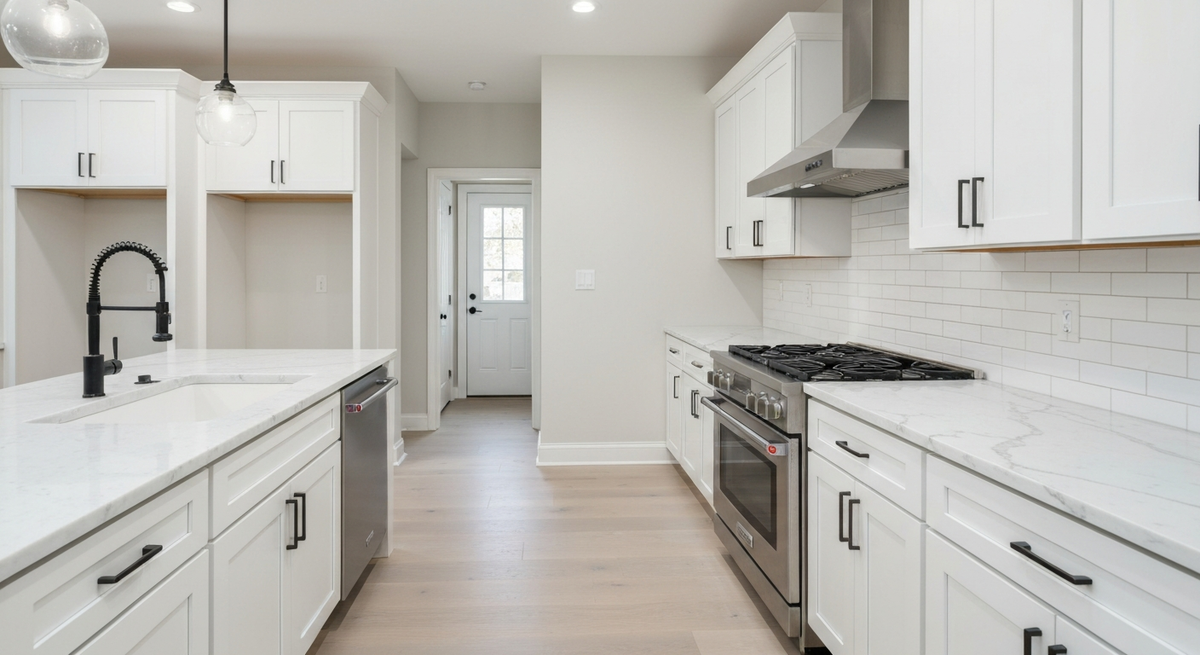
How to read this guide
This post explains the main factors that affect kitchen remodeling cost in New Jersey, how contractors price work, and practical steps to budget and prepare. It’s aimed at homeowners deciding whether to update cabinets, change layouts, or gut and rebuild.
Why costs vary so much
Kitchen remodeling cost depends on scope, materials, and site conditions. A simple cabinet and countertop refresh has very different costs than moving plumbing and changing the floor plan. Labor rates, permit requirements, and existing-condition surprises (rotten subfloor, old wiring, asbestos) also push totals up.
Primary cost drivers to check
- Scope: cosmetic upgrades vs. layout change vs. full gut.
- Cabinets: stock, semi-custom, or custom; door style and hardware.
- Countertops: material choice affects price and lead time.
- Appliances: replacement only or repositioning/rewiring.
- Plumbing and electrical: moving fixtures or adding circuits.
- Flooring and subfloor repairs: condition under existing floor.
- Permits and inspections required by your municipality.
- Project access and staging: tight spaces or multiple floors add labor.
- Unknowns found during demolition (mold, pests, structural).
Budgeting approach for NJ homeowners
Start by defining the scope in terms you can compare: what will stay, what must change, and what you want if budget allows. Get at least two detailed bids that break out materials, labor, and subcontractor work. Ask each contractor for an itemized sheet showing line items for cabinets, counters, appliances, plumbing, electrical, permits, demo, disposal, and contingency for hidden issues.
Typical contractor pricing process
- Initial call and photos: contractor asks about goals, budget, and timing.
- On-site walkthrough: contractor measures, inspects structure and systems, and notes permit needs.
- Estimate generation: itemized bid with scope, exclusions, and contingencies.
- Proposal review: homeowner compares bids, asks clarifying questions, and adjusts scope.
- Contract and deposit: signed scope, payment schedule, and timeline are documented before work begins.
How to get a realistic estimate
A realistic estimate comes from an on-site walkthrough. Bring inspiration photos and a list of must-haves vs. nice-to-haves. Request an itemized bid, ask about allowances for finishes, and confirm whether the price includes permits and disposal. If two bids differ significantly, ask each contractor to explain cost drivers and any missing line items.
Questions to ask when comparing bids
- What does the bid include and exclude?
- Who performs the work (in-house crew or subs)?
- What are the payment milestones?
- Which permits are required and are they included?
- What is the expected timeline and how are delays handled?
- How are change orders priced and approved?
- Is there a warranty on labor and how is punch-list work handled?
Minimizing surprises and controlling costs
Keep the project simple where possible: leave plumbing and appliance locations in place, choose stocked cabinet sizes, and pick widely available countertop and flooring materials. Lock selections before ordering to avoid change-order premiums. Schedule major deliveries early in the project timeline to prevent installation delays.
What reliable contractors will provide
- Written, itemized proposal and clear scope of work.
- Proof of insurance and references you can contact.
- A project schedule and payment schedule tied to milestones.
- Details about who will perform each trade and permit handling.
- A written process for handling change orders and punch-list items.
Living through a kitchen remodel in NJ
Plan where you’ll prepare meals and store dishes during work. Expect noisy, dusty periods during demolition and rough-in phases. A temporary sink or microwave can keep essentials running. Communicate with your contractor about daily start and stop times, dust control measures, and site security.
Preparation checklist before contractors arrive
- Clear out cabinets and appliances; protect valuables.
- Decide on temporary cooking and storage plans.
- Confirm parking and access for trades and deliveries.
- Notify neighbors if the project will be noisy or block access.
- Secure permits or verify contractor will pull them.
- Make final selections or set budget allowances for finishes.
Next steps and getting a local estimate
If you’re evaluating costs, schedule a walkthrough so a contractor can see site conditions and provide an itemized estimate. That estimate is the basis for budgeting and financing decisions. For service-level details and examples of work we handle, see Kitchen Remodeling, Bathroom Remodeling, and [Home.