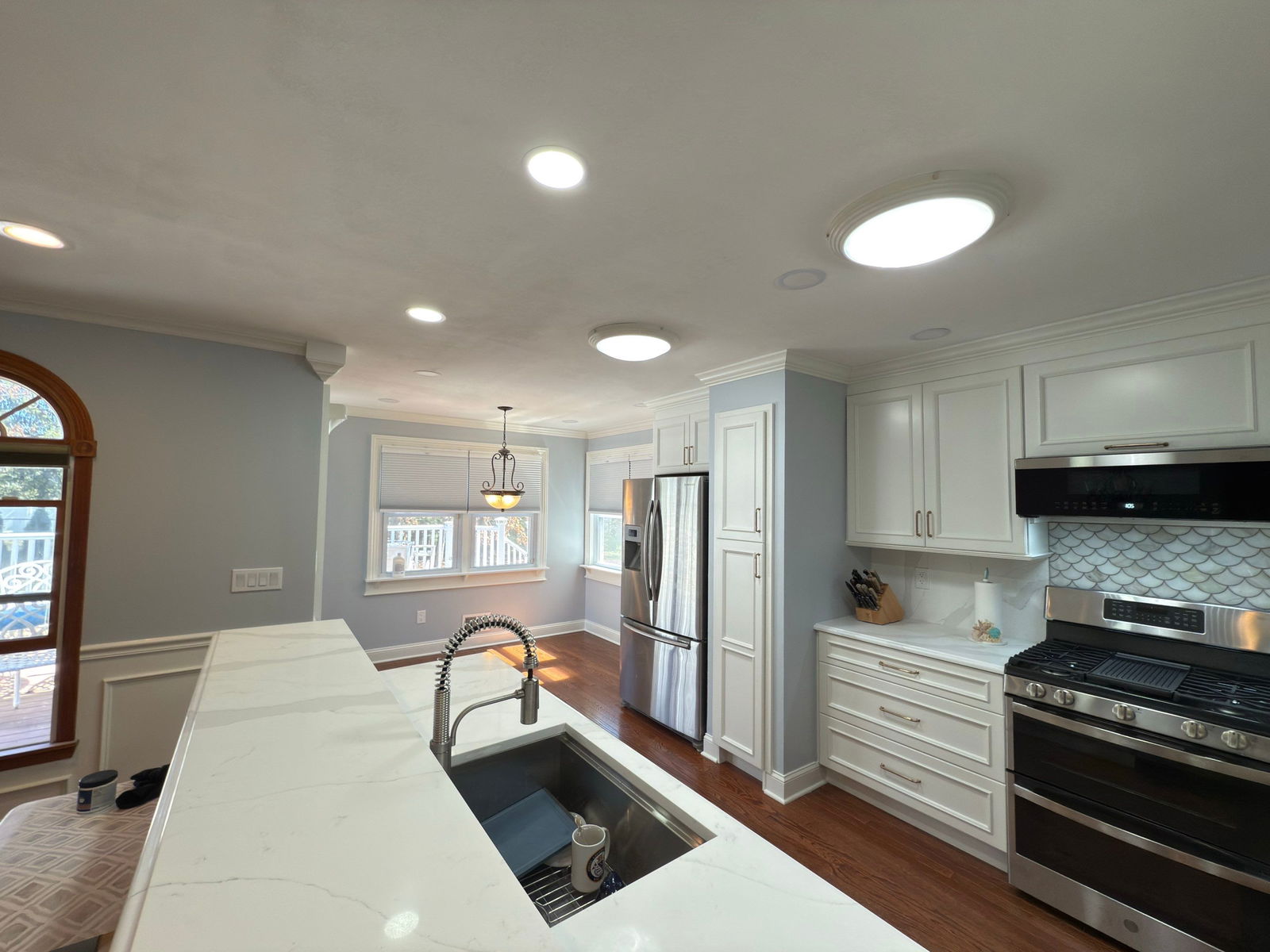
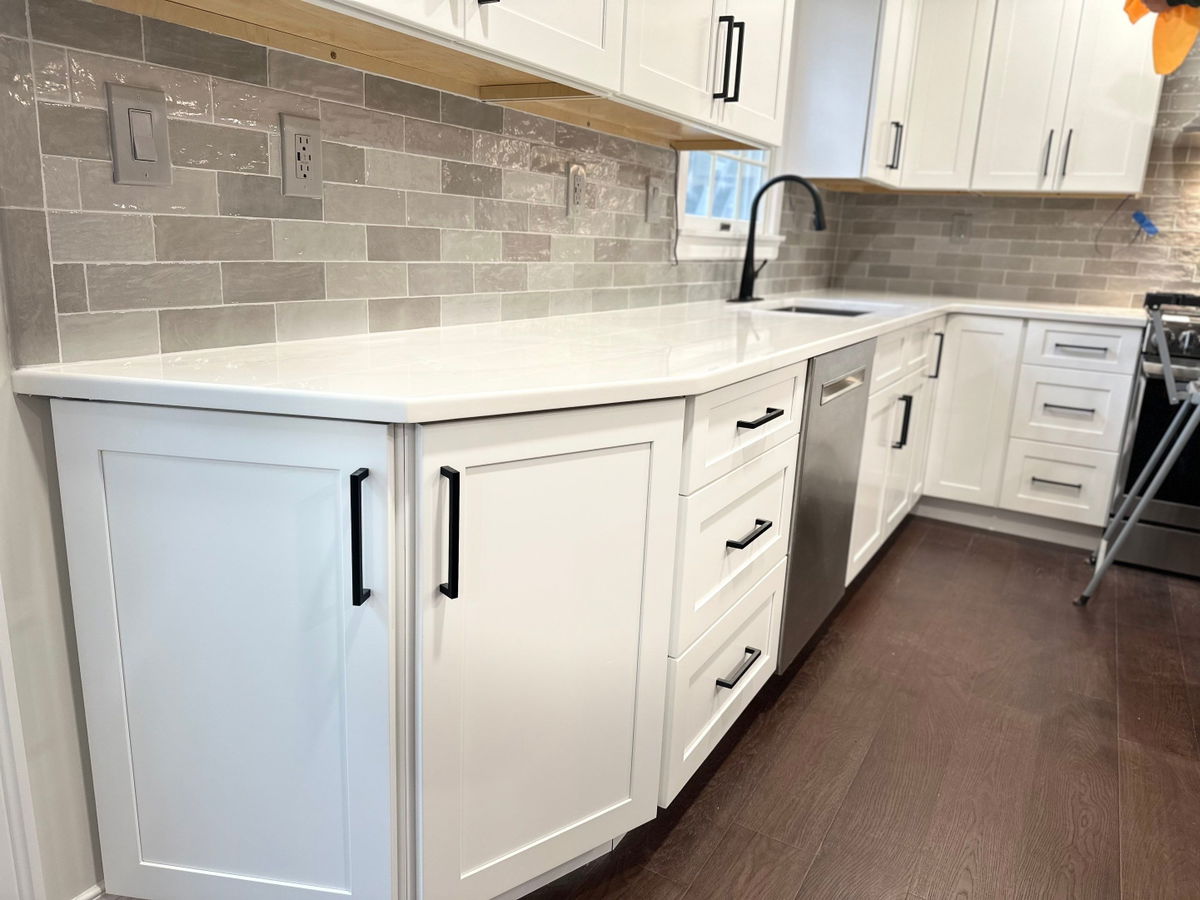
Most homeowners who call us after a failed kitchen renovation make the same admission: they approved a layout that looked fine on paper but doesn't work once the cabinets go in. The recurring problems we see in pre-1980 NJ colonials aren't about taste or trends. They're about clearances, traffic patterns, and the math of where your body actually needs to be when you're unloading groceries or plating dinner. Fixing these after the fact means tearing out new work, so it's worth identifying them before you sign off on cabinet drawings. The galley kitchen with no landing space is the layout trap we encounter most often. Original builders packed the sink, range, and refrigerator into parallel walls with 42 inches of aisle between them, which is code-compliant but leaves nowhere to set down a hot pan or a bag of groceries. When we open one of these up, the first question is whether the load-bearing wall between the kitchen and dining room can come out or needs to stay as a post-and-beam. If it stays, we're planning around it. If it comes out, we have room to add an island with 15 inches of countertop landing on the handle side of the refrigerator and 12 inches next to the cooktop. Those dimensions aren't arbitrary — they're the minimum you need to avoid putting a hot skillet on the floor. Peninsulas that block the path to the dining room are the second-most-common layout mistake we rebuild. The original colonial floor plan assumes you'll walk through the kitchen to reach the dining room, but a peninsula placed to create an L-shaped work zone often cuts that path down to 32 or 34 inches. That's tight for one person and impossible if two people are moving at once. Before we add a peninsula, we tape the floor and walk it with the homeowner while they're holding a casserole dish. If the clearance doesn't work, we either rotate the peninsula 90 degrees, replace it with an island that leaves a 42-inch path on both sides, or keep the original galley and add storage vertically instead of horizontally.
The misaligned work triangle shows up in almost every pre-1960 colonial we remodel. The range ends up on one wall, the sink on the opposite wall under the window, and the refrigerator around a corner near the back door because that's where the electric service and plumbing rough-in were cheapest to install in 1955. That layout adds 12 extra steps every time you move from the stove to the sink, and it means your back is to the room when you're cooking. We fix it by moving the range to the same wall as the sink if the vent can route through the roof, or by moving the sink off the window wall if the homeowner prioritizes a functional triangle over the view. Either way, the decision has to happen before rough plumbing, because rerouting a vent stack or a drain line after the drywall goes up doubles the cost. The sink-under-window rule is one homeowners assume is non-negotiable, but it often creates more problems than it solves. If the window is centered on the back wall and your kitchen is narrow, putting the sink there leaves no room for the dishwasher on the same wall, which means the plumber has to run a drain line under the floor to the opposite side of the room. That's code-compliant but it raises the cost and the chance of a future leak. The better question is whether you'll actually use the view while you're doing dishes, or whether you'd rather face the room while you're prepping dinner. We recommend a wall-mounted pot filler over the range and a prep sink in the island if the homeowner wants the functional benefits of two water sources without forcing the main sink into a bad spot. The only way to test a layout before demo is to tape it on the floor at full scale and live with it for a week. Use painter's tape to mark cabinet faces, appliance doors, and aisle clearances, then open the refrigerator door and walk through the pattern you'd follow to unload groceries, start coffee, and plate a meal. If you're turning sideways to pass someone, if the dishwasher door blocks the aisle when it's open, or if you have to walk around the island twice to get from the sink to the stove, the layout isn't done. For more on how we plan kitchen remodels around how your household actually moves through the room, see the kitchen remodeling service overview. If you're ready to evaluate your existing layout before you commit to a scope, the remodel planning checklist walks through the questions we ask in every first consultation.