Why plan your basement finish before you hire
Finishing a basement in Union County affects usable space, home value, and how you live day-to-day during construction. Early planning narrows surprises, helps you compare contractor bids, and sets realistic expectations for scope, timing, and disruption.
What this cost guide covers
This guide explains the main cost drivers for basement finishing, how to prioritize scope, what permits and inspections to expect in New Jersey, practical budgeting tips, and how to prepare your household for work. Use it to prepare questions for contractors and to evaluate written estimates.
Major factors that drive basement finishing cost
- Existing conditions: exposed concrete, water issues, ceiling height, and access. Repairing water or foundation problems increases scope.
- Scope and layout: adding bedrooms, full baths, kitchens, or separate entrances adds complexity and code requirements.
- Mechanical work: new HVAC runs, ducting, electrical panel upgrades, and plumbing are among the highest-cost items.
- Finishes and fixtures: flooring type, wall systems, ceiling finishes, and lighting selection have wide cost variability.
- Permits and inspections: local building permits and required inspections in Union County affect schedule and budget.
- Site constraints: narrow access to the basement or limited parking can raise labor time and logistics costs.
How to set a realistic budget
Start by defining must-haves versus nice-to-haves. Prioritize structural fixes and code-required work first, then finishes. Ask contractors for a cost breakdown: demo/site work, framing and insulation, mechanicals, finishes, and permits. Build a contingency (commonly 10–20%) for unknowns discovered once work begins.
Permits, inspections, and code considerations in New Jersey
Basement work that changes egress, adds a bedroom or bathroom, or modifies mechanical systems typically requires permits. Expect plan review and inspections for structural, plumbing, electrical, and HVAC work. Confirm permit responsibility—owner or contractor—before signing a contract and include permit timelines in your project schedule.
Common basement finish options and their implications
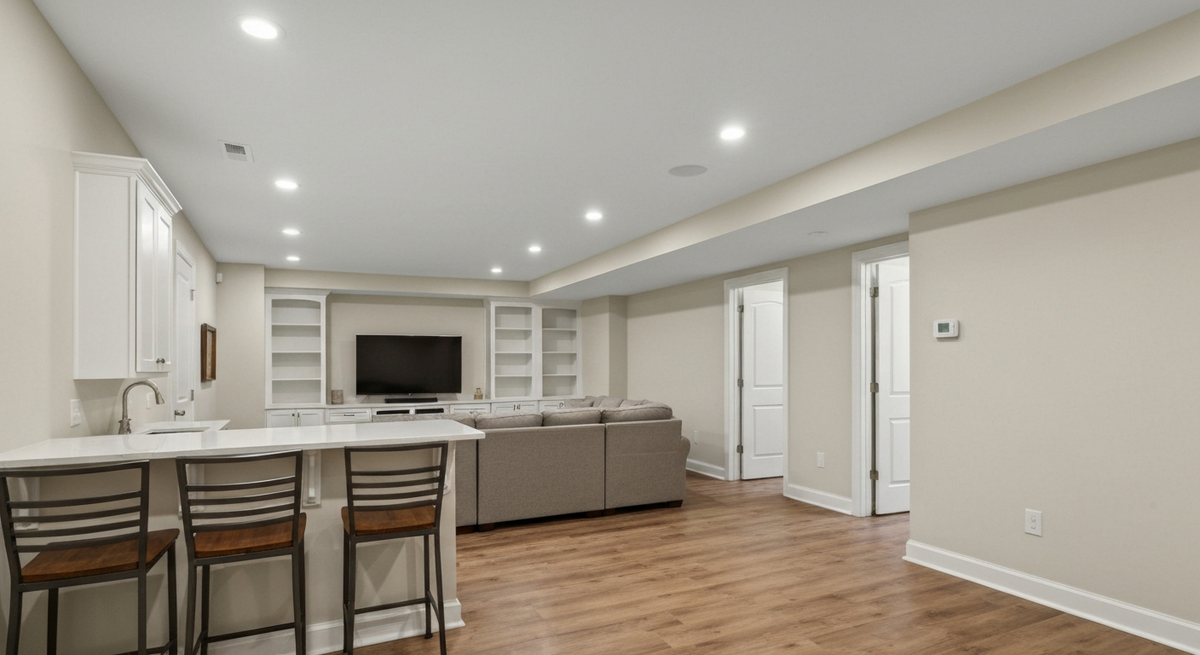
- Recreational room or family room: usually lowest complexity if no mechanical changes are needed.
- Home office or media room: may require upgraded lighting, outlets, and sound treatments.
- Full bathroom: requires plumbing reroutes, a drain location check, and waterproofing.
- Basement bedroom: must meet egress, ceiling height, and ventilation code requirements.
- Wet bar or kitchenette: adds plumbing, electrical, and potentially ventilation; raises inspection requirements.
Typical planning and decision process
- Step 1 — Measure and inspect: verify ceiling height, floor slope, water history, and mechanical locations.
- Step 2 — Define scope: list required rooms, exits, and mechanical upgrades.
- Step 3 — Preliminary budget: request line-item estimates from 2–3 contractors.
- Step 4 — Permits and drawings: secure any necessary drawings and submit permit applications.
- Step 5 — Schedule and logistics: agree on start date, staging, parking, and material deliveries.
- Step 6 — Construction and inspections: follow staged inspections and maintain communication about changes.
How to compare contractor estimates
Compare written estimates line-by-line: scope, materials, allowances, exclusions, permit handling, payment schedule, and contingency. Cheaper bids often reflect omitted items or lower-quality materials. Ask each contractor how they handle unexpected conditions and request a timeline tied to milestones and inspections.
Living through a basement remodel: what to expect
Expect noise, dust, and periods when parts of the house are occupied by tradespeople. Plan for staging areas and protected walkways. Clarify daily start/stop times, where workers will use restrooms, and how the site will be secured at night. Keep valuables and fragile items in a closed room away from the work area.
Next steps and internal resources
To move from planning to action, gather photos, measurements, and a wish list. Request a walkthrough with a contractor who will inspect existing conditions and provide a written estimate. For related interior work, see our service pages for Kitchen Remodeling and Bathroom Remodeling.
What to expect from a professional estimate
- A written, itemized scope that separates materials, labor, and permits
- Clear exclusions and allowances for finish selections
- A proposed schedule with inspection milestones
- A process for handling unforeseen issues and change orders
Project checklist before your walkthrough
- Photos of the basement from multiple angles and measure ceiling height
- List of intended uses (bedroom, bathroom, office, storage)
- Known water or moisture history and any previous repairs
- Existing mechanical locations: furnace, water heater, sewer stacks