Who this guide is for
If you own a home in Morristown or nearby New Jersey towns and are weighing a basement finish, this guide focuses on the decision points that drive price: how much work the space needs, what systems must be added or upgraded, and how finish choices change labor time.
Common basement project types
- Basic drywall and flooring over an existing dry space (cosmetic finish).
- Adding a bathroom and wet plumbing (partial remodel).
- Creating bedrooms or egress-compliant spaces (adds framing, windows, or wells).
- Full gut with mechanical upgrades (insulation, HVAC, electrical, sump or waterproofing).
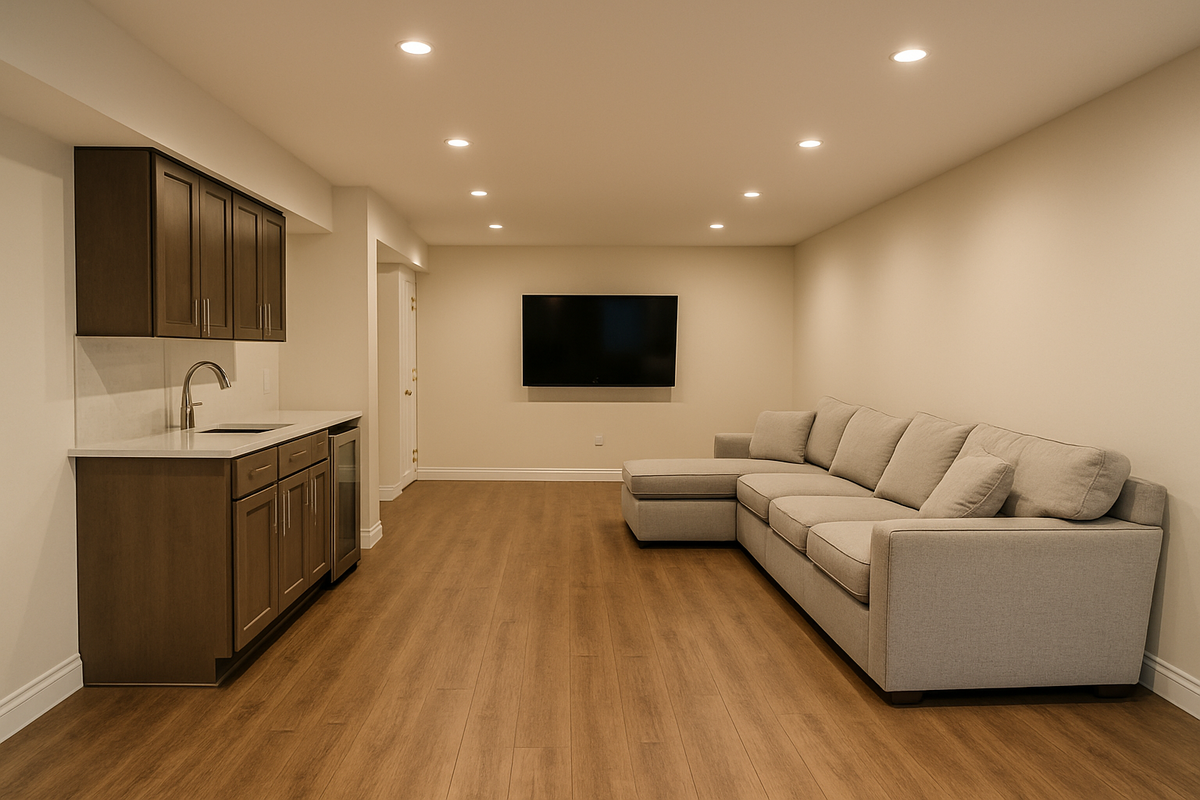
- Living-suite conversions with kitchens or wet bars (highest scope).
Major factors that affect basement finishing cost
Contractors build estimates from measurable items and risk factors. Key drivers are: how dry and level the space is; whether a bathroom or kitchen is added; existing electrical and heating capacity; presence of moisture or foundation issues; need for egress windows; and local building-code requirements.
Site and condition checklist that changes price
- Signs of moisture or past water intrusion — may need waterproofing or drainage work.
- Floor level and slab condition — may require leveling or framing on sleepers.
- Ceiling height — low ceilings often need creative framing or excavating to meet code.
- Access for trades and equipment — tight access slows work and increases labor.
- Existing mechanical systems — extending HVAC, adding ductwork, or upgrading electrical service adds cost.
Typical contractor process for basement finishing
- Site visit and walkthrough: Contractor reviews condition, measurements, and homeowner goals; identifies required permits.
- Estimate and scope: Itemized proposal listing demo, framing, insulation, MEP (mechanical, electrical, plumbing), finishes, and allowances for fixtures.
- Permits and schedule: Obtain required permits; set start date and phased schedule for trades.
- Construction: Demolition (if any), rough mechanicals and framing, inspections, insulation/drywall, finish carpentry, painting, flooring, final mechanical hookups and final inspection.
- Final walkthrough and punch list: Address minor items, hand over documentation and warranty information for installed systems.
How contractors present estimates (what to compare)
A usable estimate breaks down scope by trade and material allowances rather than a single lump-sum line. Compare what each bid includes: waterproofing measures, insulation R-values, type of finish drywall, window or egress work, HVAC extension vs mini-split, plumbing rough-in vs finished bathroom, and permit fees.
Ways to control or reduce basement finishing cost
- Keep plumbing runs short and cluster wet areas to lower piping and labor.
- Choose durable, cost-effective finishes (vinyl plank flooring, acrylic tub surrounds) over custom millwork.
- Retain existing mechanicals where safe and code-compliant rather than full replacements.
- Plan for phased work: finish a living area first and add a bathroom later.
- Address moisture and grading issues before finishing to avoid tear-outs and higher long-term costs.
Project examples and what to expect
- Cosmetic basement finish: drywall, primer/paint, basic flooring, and LED fixtures — limited mechanical changes; permits may be minimal.
- Bathroom addition in basement: requires plumbing rough-ins, venting, waste lines, and an inspection schedule; impacts timeline and budget more than cosmetic work.
- Full living suite: includes egress window or well, upgraded electrical panels, HVAC extension or separate system, and full finishes; highest coordination between trades and inspectors.
What to confirm with any contractor you consider
- Written, itemized estimate showing allowances and exclusions.
- Proof of business insurance and worker coverage before work starts.
- Clear permitting plan and who is responsible for pull/inspection fees.
- Project schedule with key milestones and a point of contact for daily questions.
- References for similar local basement projects and examples of completed work.
Local considerations for Morristown, NJ
Northern New Jersey homes can present unique challenges: older foundation types, property grading that affects drainage, and municipality-specific egress or trade permit requirements. Select a contractor familiar with local inspectors and common issues in Morristown neighborhoods to avoid rework.
Next steps and how to get a reliable estimate
Start with an on-site walkthrough so a contractor can inspect for moisture, measure clearances, and confirm structural or MEP constraints. A written, itemized estimate tied to a draft schedule is the basis for comparing contractors.