Who this guide is for
This guide helps Morris County homeowners weighing a basement finish to add living space, storage, or a rental suite. It explains the main cost drivers, how to prepare your house and budget, and how contractors price interior basement work in New Jersey.
Quick overview of costs and expectations
Basement finishing costs vary with scope: a basic family room vs. a multi-room suite with a bathroom and mechanical upgrades. Expect variables like moisture control, egress, plumbing, and structural work to shift budgets. Read the sections below to translate your goals into realistic bids.
Major factors that affect basement finishing cost
- Scope and layout: single open rec room vs. bedrooms, bathroom, kitchenette or separate entrance.
- Waterproofing and drainage: interior vapor barriers, sump pumps, or exterior excavation if active leaks or high water table.
- Ceiling height and framing: framing, soffits, or lowering floor to meet code increases cost.
- Plumbing and electrical: new drains, water lines, sewage connections, HVAC runs, and service panel upgrades.
- Egress and windows: adding egress windows or enlarging wells for bedrooms raises budget and permits.
- Insulation and vapor control: proper insulation, vapor barriers, and thermal drywall for code and comfort.
- Finishes and fixtures: flooring type, built-ins, bathroom fixtures, and appliances drive material cost.
- Permits and inspections: municipal fees and required inspections in Morris County towns.
Typical scope items contractors price separately
Contractors often separate line items: demolition and cleanup, waterproofing, framing, mechanical rough-ins, insulation, drywall, finishes, flooring, trim, and final fixtures. Ask for itemized bids so you can compare apples to apples and decide where to upgrade or scale back.
Planning steps — how to prepare before you request bids
- Define use: list required rooms (bedroom, bathroom, wet bar, storage) and any accessibility needs.
- Inspect for moisture and structure: get a professional assessment if you suspect leaks or cracks.
- Check local codes: confirm bedroom egress, ceiling height, and septic/sewer requirements with your town building department.
- Set a priority list: must-haves vs. nice-to-haves to guide value decisions during bidding.
- Gather documents: property survey, existing HVAC/electrical panel info, and any previous basement reports.
- Schedule walkthroughs: invite 2–3 contractors to view the space and provide itemized estimates.
How contractors in Morris County typically estimate a project
Contractors combine material costs, labor hours, subcontractor quotes, permit fees, and contingency for unseen conditions into a project estimate. A clear scope reduces change orders. Ask for a line-item estimate, timeline, payment schedule, and what’s excluded (for example, exterior excavation or septic work).
Common surprises that add cost
Hidden costs include required sump pumps or interior drains, mold remediation, structural repairs, underfloor insulation, raising ceiling height, or replacing old sewer laterals. Plan a contingency in your budget for these possibilities and get a pre-bid inspection when possible.
Living through the work: disruption to expect
Finishing a basement often involves dust, noise, and intermittent loss of basement access. Plumbing and HVAC tie-ins may require brief water shutoffs or system adjustments. Confirm daily work hours, staging areas for materials, and clean-up plans with your contractor to minimize disruption.
Value choices that control cost without reducing usability
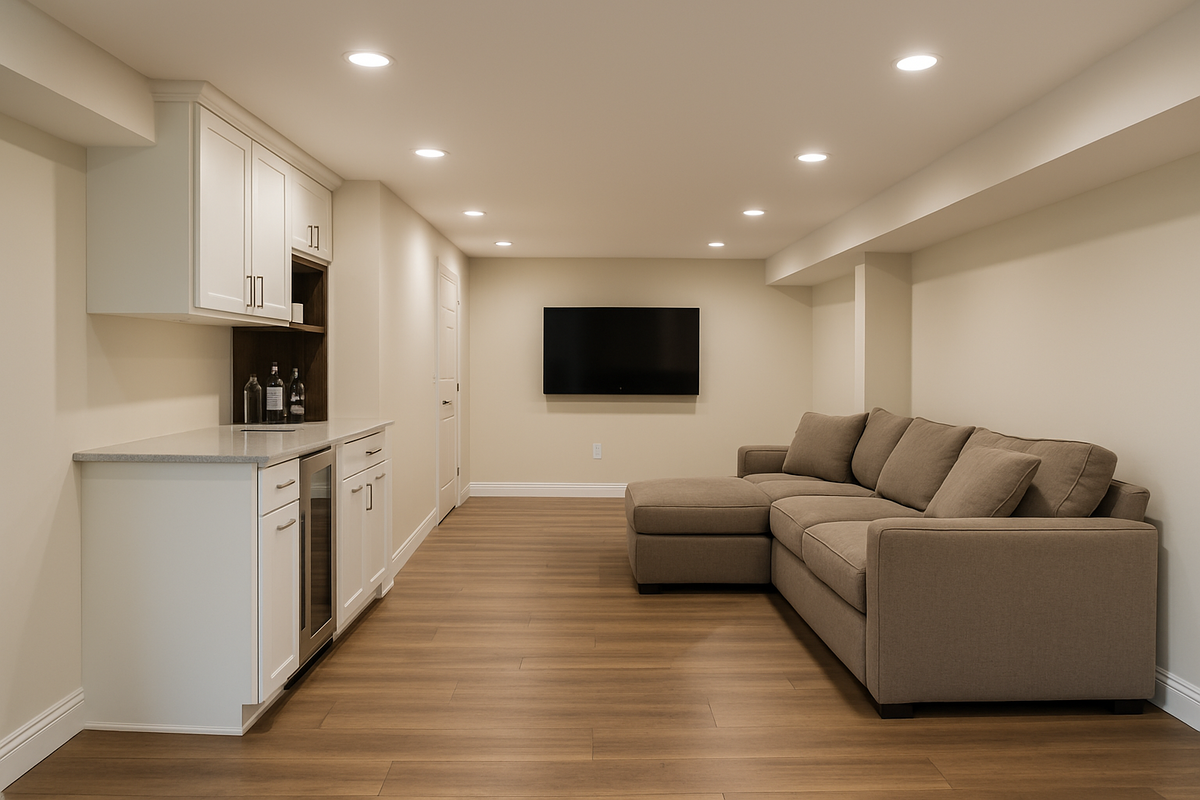
- Keep an open plan instead of multiple framed rooms to save on framing, doors, and trim.
- Use vinyl plank or engineered flooring suited for basements instead of hardwood.
- Install a three-quarter bathroom instead of a full bath to reduce plumbing complexity.
- Select stock cabinetry and fixtures rather than custom millwork.
- Defer nonessential finishes (built-ins, high-end tile) until after the main scope is complete.
Permits and inspections in Morris County
Most basement finishes require permits: building, electrical, plumbing, and HVAC. Permit requirements vary by town—confirm with your municipality’s building department. Proper permitting protects you at resale and ensures work meets code for health and safety.
Related services and local pages
- Kitchen Remodeling — ideas if you plan a kitchenette or connected remodel.
- Bathroom Remodeling — for basement bath layouts and waterproofing.
- Fair Lawn, NJ — local permit and contractor considerations.
- Mahwah, NJ — town-specific code and inspection notes.
What to ask contractors during the estimate
- Can you provide an itemized written estimate and scope of work?
- Who will supervise the job daily and how will communication happen?
- What permits and inspections are included in the estimate?
- How do you handle unforeseen conditions and change orders?
- Can you provide references for similar basement projects in Morris County?