Who this guide is for
This guide is for Essex County homeowners weighing whether to finish a basement, comparing rough budgets, or preparing to hire a contractor. It explains cost drivers, realistic ranges to expect in New Jersey, timeline considerations, common code and site issues, and steps to get a reliable estimate.
How contractors price basement finishing
Contractors build estimates from several line items: demolition and prep, framing and insulation, mechanicals (HVAC, ductwork, plumbing, electrical), moisture mitigation and sump work, drywall and finishes, flooring, stairs and egress, bathroom fixtures, and permit/inspection fees.
Primary cost drivers to check on-site
- Water and moisture control – waterproofing, sump pump, and perimeter drains if needed
- Ceiling height and egress – additional work to meet code for bedrooms
- Mechanical upgrades – furnace, ducting, or new HVAC branches
- Plumbing location – adding bathrooms or relocating stacks increases cost
- Electrical capacity – panel upgrades or new circuits add labor and permit costs
- Structural changes – cutting for stairs, adding windows, or altering load paths
- Finish level – paint and carpet vs. tile, custom millwork, or built-ins
Typical project scope breakdown
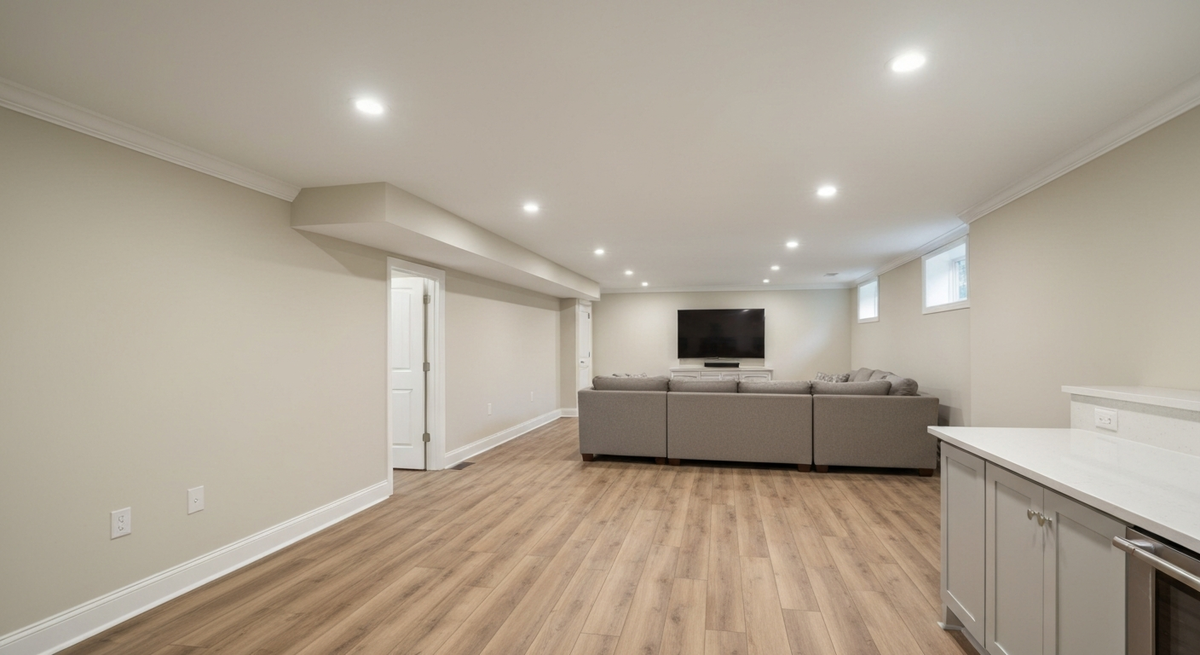
A common finished basement scope includes framing, insulation, drywall, flooring, lighting and switches, an egress window or bulkhead, a bathroom rough-in and finish, paint, and trim. Upgrading mechanicals or moving plumbing can shift the budget more than doubling those line items compared with a straight finish.
How to estimate your own budget (practical steps)
1) Inspect for moisture and measure clear height. 2) Decide number of rooms, bathroom count, and finish level. 3) Identify mechanical work: will heating, cooling, or the panel need changes? 4) Get at least two on-site quotes with line-item breakdowns and one written scope that includes permits and inspections. 5) Add a contingency for unknowns (sump, mold, rerouted plumbing).
Typical project timeline steps
- Initial site visit and scope definition
- Written estimate and scope review
- Permit submission and approval (town-specific timing varies)
- Demolition and rough-in (plumbing, electrical, HVAC, waterproofing)
- Framing, insulation, and drywall
- Finish work: paint, flooring, trim, fixtures
- Final inspections and turnover
What commonly causes delays in Essex County projects
Permit wait times, unforeseen water issues, major electrical or plumbing upgrades, and material availability are the usual delay sources. Weather typically affects exterior waterproofing or bulkhead installations. Clear scopes and early permit filing reduce schedule risk.
Ways to control cost without sacrificing quality
- Keep mechanical layouts near existing systems to limit plumbing and duct runs
- Choose durable mid-range finishes instead of custom options
- Address moisture before finishing to avoid future repairs
- Request itemized bids so you can compare labor and material line items
- Phase work: finish main living areas first, add an extra bathroom later
What to look for when vetting contractors
- Detailed written scope with line-item pricing and exclusions
- Clear permit and inspection plan tied to the estimate
- References for similar basement projects and an on-site portfolio
- A timeline showing milestones and expected inspection points
- Contract terms covering change orders, payment schedule, and cleanup
Living through basement finishing work
Expect noise, dust, and disruption to systems that serve your home. Contractors should provide a plan for dust control, a schedule for noisy phases, and a contact for daily questions. If plumbing or HVAC will be offline, plan for alternate arrangements ahead of those phases.
Next steps and internal resources
- Basement Finishing Service — request a walkthrough and itemized estimate
- Basement Finishing: What to Expect — practical homeowner checklist